
C-Reactive Protein (CRP) Test Kit
One saliva sample · patented hollow-gold platform · visual colorimetric reading in 15 minutes
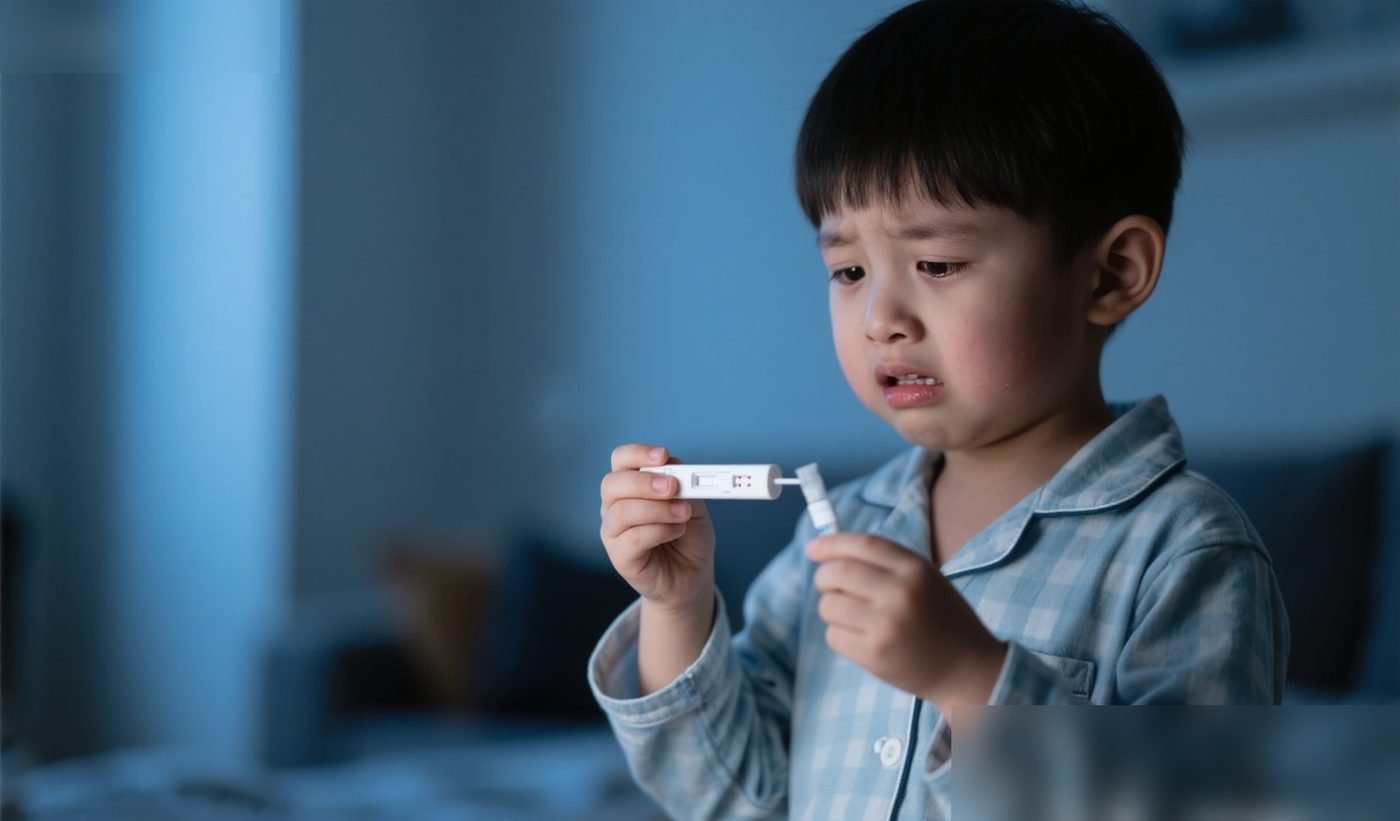
One of the few home CRP screening solutions worldwide combining saliva sampling, instrument-free reading and at-home accessibility — indicating whether an inflammatory response is present, helping distinguish bacterial from viral trends, and supporting antibiotic stewardship and therapy assessment.
Specifications
Per manufacturer's IFU| Product name | C-Reactive Protein (CRP) Test Kit (hollow-gold method) |
| Marker | C-reactive protein (CRP) |
| Sample type | Human oral saliva · approx. 0.1 mL |
| Cut-off | 5 mg/L (blood-equivalent) |
| Reading | Two-tier visual colorimetric: negative / positive |
| Time to result | 15–20 minutes |
| Storage | Room temperature · ambient transport |
| Registration | Registration in progress |
Test principle
A double-antibody sandwich immunochromatographic assay: anti-CRP antibody conjugated to hollow-gold particles binds CRP in the sample and migrates along the membrane, where it is captured by the immobilized antibody at the test line (T). A visible control line (C) confirms the test is valid.
Product visuals
From product materials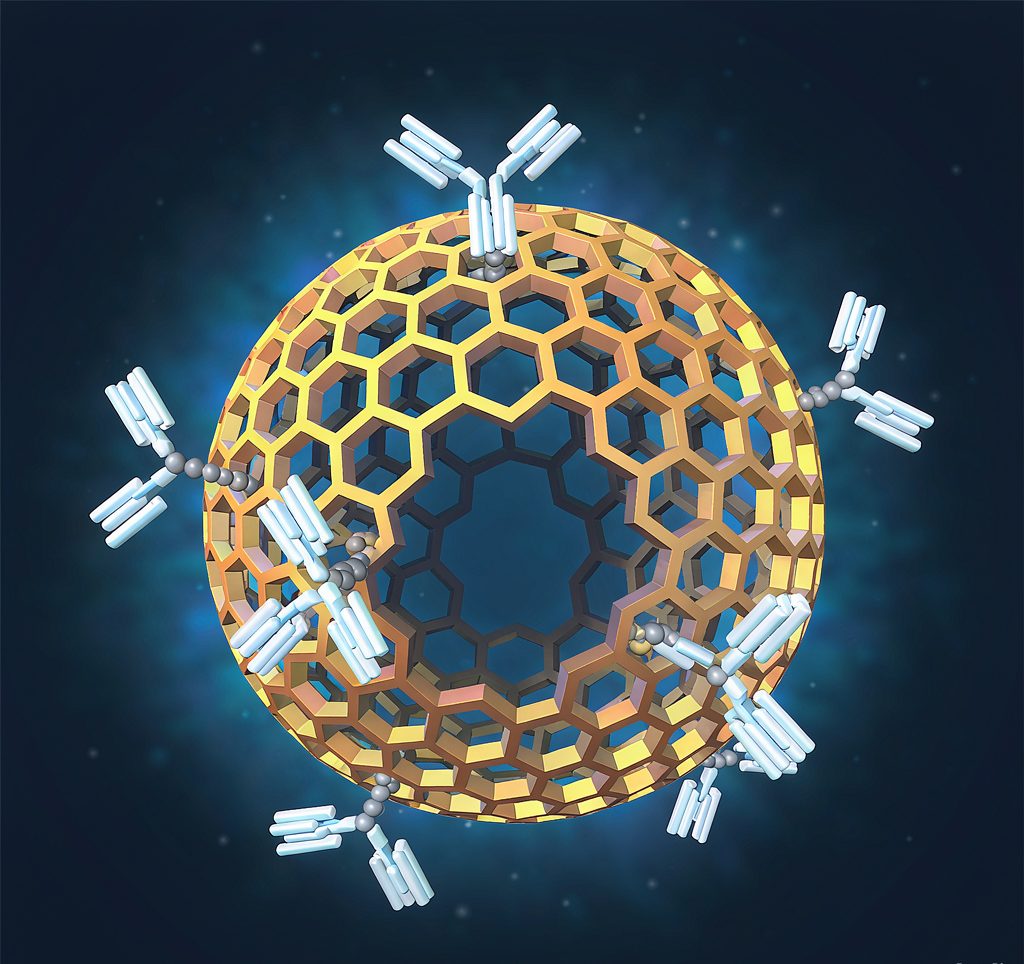
Kit composition
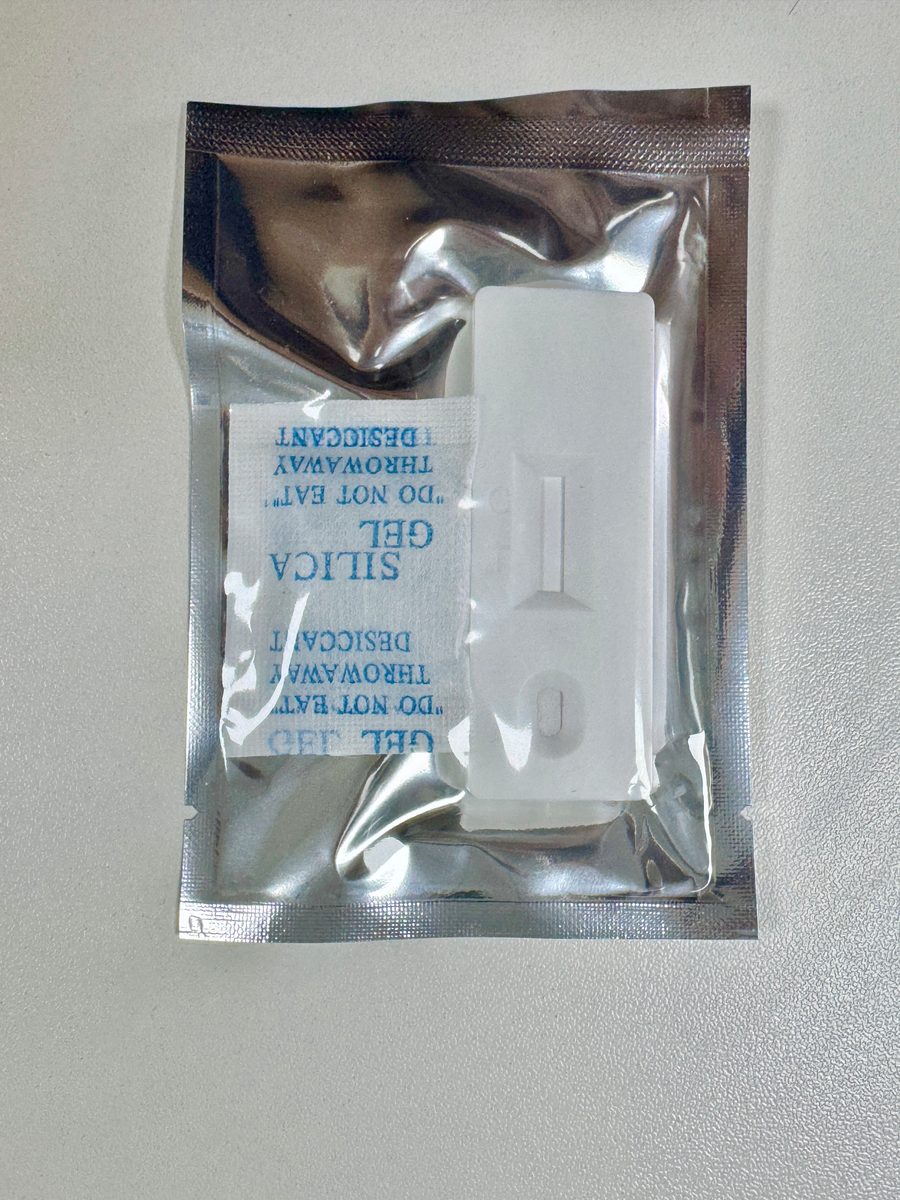
- Test cassetteIndividually foil-pouched, with test line and control line
- Saliva swab + collection tubeNon-invasive · no fasting, no centrifugation
- Sample diluentPre-filled tube · ready to use
- Color cardPrinted inside the pack · compare on the spot
- Instructions + control cardIncludes operating/reading guide and QC record
Procedure
- 1Saliva collectionCollect approx. 0.1 mL saliva with the swab into the tube and mix 10 times
- 2Add sampleAdd 2 drops into the sample well and start timing
- 3WaitStand at room temperature for 15–20 minutes; do not read early
- 4Read visuallyObserve the C and T lines and compare with the color card
Result interpretation
Reading after 30 minutes may produce a false positive from background diffusion — keep strictly to the 15–20 minute window.
Application settings
Childhood fever, early infection signals in the elderly, periodic monitoring for chronic-disease patients.
Community health centres, township clinics, school clinics: replaces send-out blood testing and supports antibiotic prescribing decisions.
Fever clinics, paediatric emergency, field rescue, major-event cover: no power required, ready to use.
Re-test 48–72 h after starting therapy to quantify the CRP drop and assess treatment response.
Clinical guidelines
- WHO antimicrobial stewardship (AMS)Infectious disease differentiationBacterial vs viral · localised vs systemic
- Paediatric CAP guidelineInfection in children / elderlyAtypical symptoms · early screening and intervention
- AHA residual cardiovascular riskChronic-disease inflammation monitoringHypertension / hyperlipidaemia / diabetes / rheumatoid arthritis
- Surgical perioperative guidelinePre- / post-operative monitoringPost-op infection alert · wound healing assessment
- National antimicrobial clinical guidelineAntibiotic efficacy assessmentMonitor at 48–72 h · avoid overuse
- Chinese health-management consensusSub-health / screening populationLow-grade inflammation screening · proactive health management
Home self-testing
- 1Childhood cold and feverHelps parents judge at home whether an immediate visit is needed
- 2Chronic-disease monitoringHypertension / diabetes / rheumatoid arthritis · assess residual inflammation
- 3Post-discharge follow-up in the elderlyHome monitoring after discharge · early infection alert
- 4Antibiotic response verificationAt 48–72 h · quantify the CRP decrease
- 5Periodic sub-health screeningHealth management for 30+ · low-grade inflammation screening every 6–12 months
Technology barriers
Hollow-gold particles offer a larger surface area and stronger signal with high-affinity, high-specificity antibody binding (patent No. 201710273592.8 / 202111117843.6)
Suppresses interference from mucins and enzymes in saliva to preserve specificity
Equivalence between salivary and blood CRP established on 400+ real-world samples
Sensitivity down to ng/mL in saliva, supporting detection of early low-grade inflammation
Multi-centre clinical study completed; real-world data support accuracy
Competitive comparison
Based on publicly available information| Dimension | This product | 进口化学发光 / 生化(罗氏 / 雅培 / 西门子) | 国产 ELISA CRP 试剂盒 | 血液 POCT / 胶体金法(QuikRead go / 万孚等) |
|---|---|---|---|---|
| Sample | Oral saliva | Serum / plasma | Serum | Whole blood / serum / plasma |
| Collection | Non-invasive saliva | Venous draw | Venous draw | Fingerstick / venous draw |
| Instrument needed | No · visual reading | Yes (large chemistry / CLIA analyser) | Yes (microplate reader) | Some require a reader |
| Time to result | 3–15 min | 30–60 min | 2–3 h | 3–15 min |
| Range / report | Blood-equivalent 5 mg/L cut-off | Quantitative 5–200 mg/L | Quantitative 5–200 mg/L | Qualitative or quantitative 5–200 mg/L |
| Qual / quant | Qualitative | Quantitative | Quantitative | Quantitative / qualitative |
| Setting | Home / primary care / screening / field | Central laboratory | Secondary hospital laboratory | Hospital / clinic / primary care |
| Operator | Anyone (home use) | Laboratory technician | Laboratory technician | Trained personnel |
| Biohazard risk | No blood exposure | Blood exposure | Blood exposure | Blood exposure |
| Registration | Registration in progress | NMPA approved | NMPA approved | NMPA / CE approved |
Overseas home CRP products still rely on fingerstick blood plus a reader or mail-in laboratory. This kit combines non-invasive sampling, instrument-free reading, immediate results and home accessibility in one — rarely seen globally.
Market outlook
Sources: Frost & Sullivan China POCT Industry Report, AskCI, and published annual reports
Specifications and clinical references on this page are taken from the product instructions and technical documentation; market data is compiled from public sources for industry reference only.